
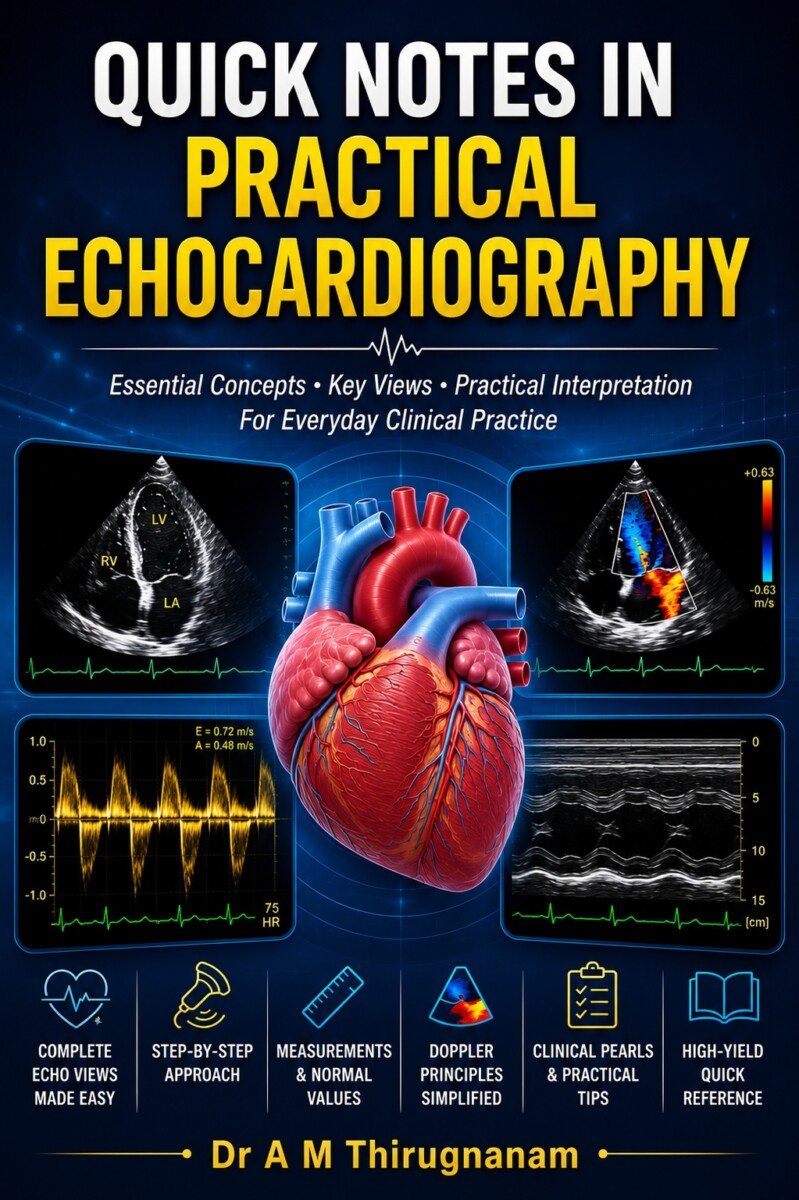
A course where the learner holds the probe
Echocardiography is the only track we run where the practical skill and the interpretive skill cannot be separated. A learner can be word-perfect on the diastolic function algorithm and still produce an uninterpretable study, and no amount of interpretation teaching will rescue it.
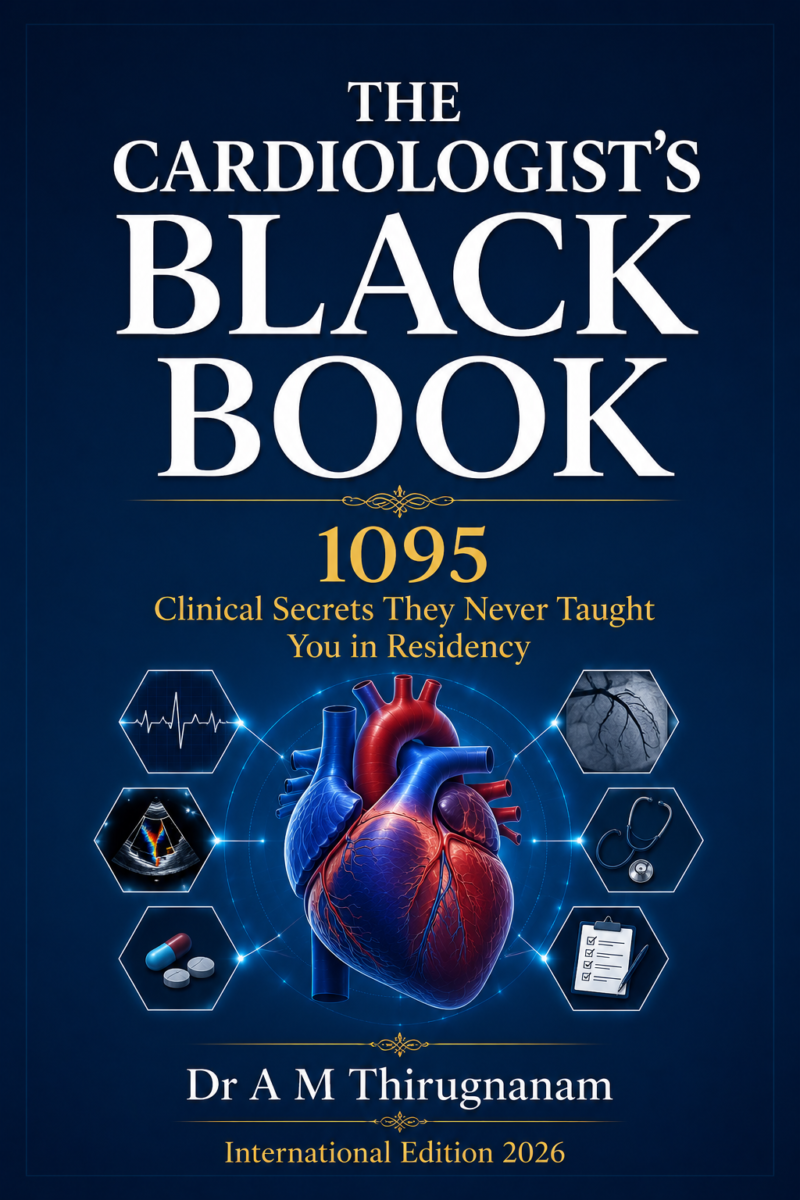
This text is set material because it takes the same position: each of the 42 chapters deals with acquisition before interpretation, which is the order the modules teach in and the order the practical assessment marks in.
Module structure it supports
The first block covers standard transthoracic windows and their optimisation, paired with hands-on practice where learners have scanner access and with recorded acquisition review where they do not. The second block is systematic ventricular assessment. The third is the valvular sequence with quantification thresholds. Diastolic function, pericardial disease and tamponade, endocarditis, prosthetic valves, adult congenital lesions, stress echo, contrast and strain follow.
430 notes in total, weighted towards the measurements that carry decisions rather than the ones that are merely conventional.
Reporting module
One module and one chapter are given entirely to reporting — what belongs in a report, what must never be inferred beyond the images, and how to phrase uncertainty so the referring clinician can act on it correctly. Learners consistently under-rate this module before taking it and over-rate it afterwards.
Focused ultrasound learners
Intensivists and emergency physicians building focused cardiac ultrasound competence are directed to a defined subset of eighteen chapters rather than the whole text, and their assessment is scoped accordingly. The full set remains available to them.
Enrolment fit
Cardiology residents and fellows, echo technologists, intensivists, emergency physicians, and sonographers extending into cardiac work.
Access
PDF, lifetime access, supplied via CardiologyBooks.com.
Reviews
There are no reviews yet.