
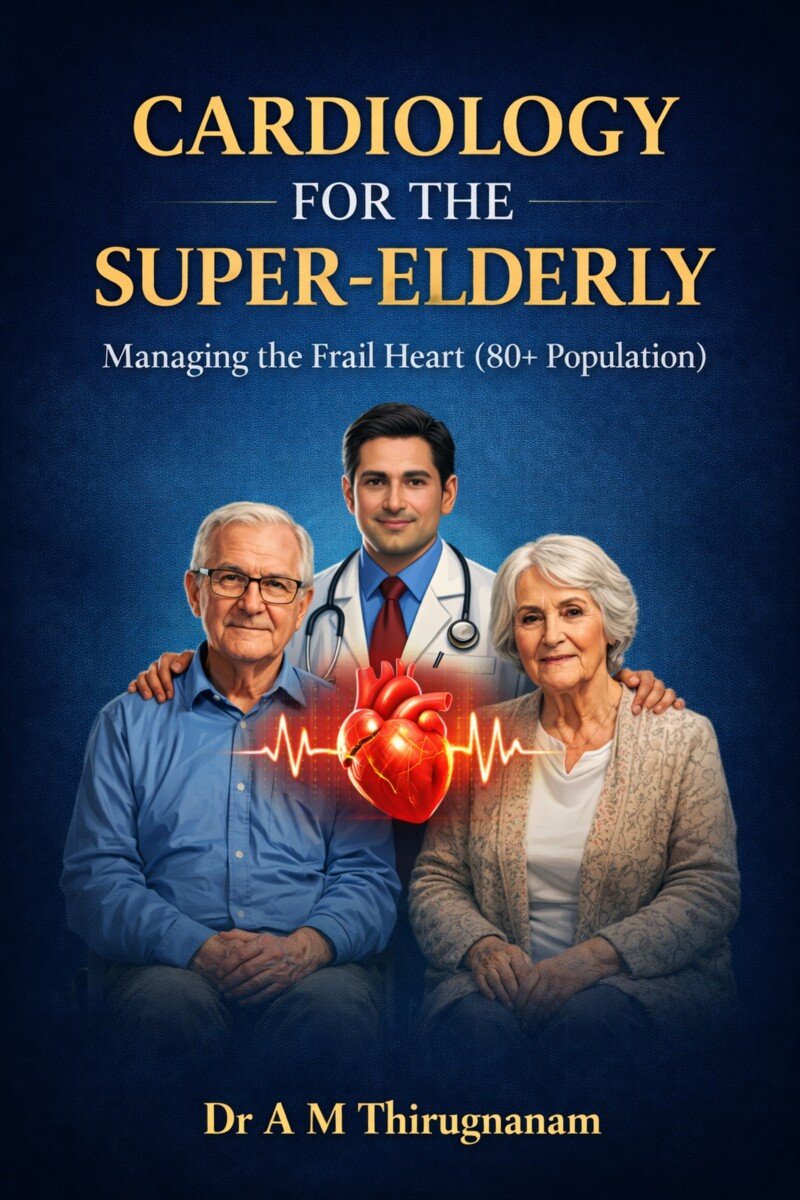
Cases the guideline cannot answer
Every case in this track features a patient who would have been excluded from the trials underpinning the relevant guideline — too old, too frail, too many other medications. Learners are asked what they would do, and the module then shows exactly which exclusion criterion the patient would have failed.
The point is not that guidelines are useless. It is that applying them here is an act of extrapolation, and it should be a conscious one.
Frailty first
The opening module, because frailty predicts outcome better than age and is almost never recorded. Learners score the same patient with different instruments and see how much the answer moves, which is a more honest introduction than presenting one tool as authoritative.
Atypical presentation modules
Infarction without chest pain. Heart failure presenting as confusion or falls. Aortic stenosis called ageing for two years. Atrial fibrillation found after the stroke it should have prevented. Cases open with the non-cardiac presentation, and most cohorts miss the first one entirely — which is the intended lesson.
The difficult decisions
Anticoagulation when stroke and bleeding risk are both high. Structured deprescribing. Revascularisation and valve intervention in the very old, including when TAVI prolongs a decline. Ceilings of care, taught as a conversation rather than a decision.
Enrolment
Cardiologists, geriatricians, general physicians and trainees on any clinical track.
PDF, lifetime access, from CardiologyBooks.com.
Reviews
There are no reviews yet.