
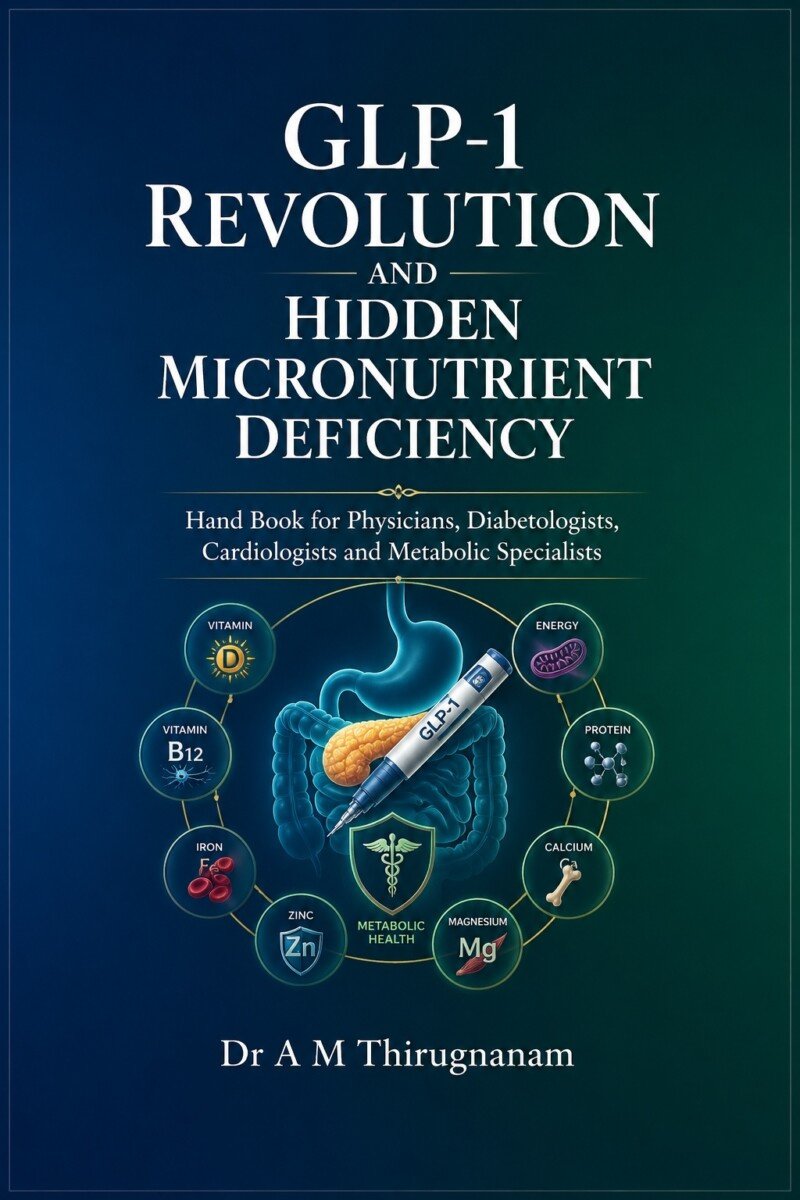
A class most prescribers were never taught
GLP-1 receptor agonists moved from diabetes to obesity to cardiovascular medicine faster than any teaching caught up. Most learners arriving at this block are already prescribing or endorsing them, and almost none have been taught the class systematically.
These 392 pages are the set text for closing that gap.
Two halves
The first half is the outcome evidence: the cardiovascular trial programme, the effect in patients without diabetes, the emerging preserved-ejection-fraction signal, and where benefit appears independent of weight loss.
The second half is the part clinicians are not doing. Rapid weight loss is not selective — lean mass, including cardiac muscle, goes with it, and disproportionately in the older and frailer patients most likely to be prescribed these drugs for cardiac indications. Reduced intake produces deficiencies with direct cardiac consequences: thiamine, magnesium, potassium, iron, vitamin D and B12.
The monitoring module
Learners are asked to design a monitoring schedule, and then shown that no major guideline currently specifies one. It is an uncomfortable module and a realistic one — the evidence has outrun the guidance and clinicians must decide anyway.
Also covered
Titration and gastrointestinal tolerance, interaction with heart failure therapy, what happens on discontinuation, and the resistance-exercise and protein conversation that should accompany the prescription.
PDF, lifetime access, via CardiologyBooks.com.
Reviews
There are no reviews yet.