
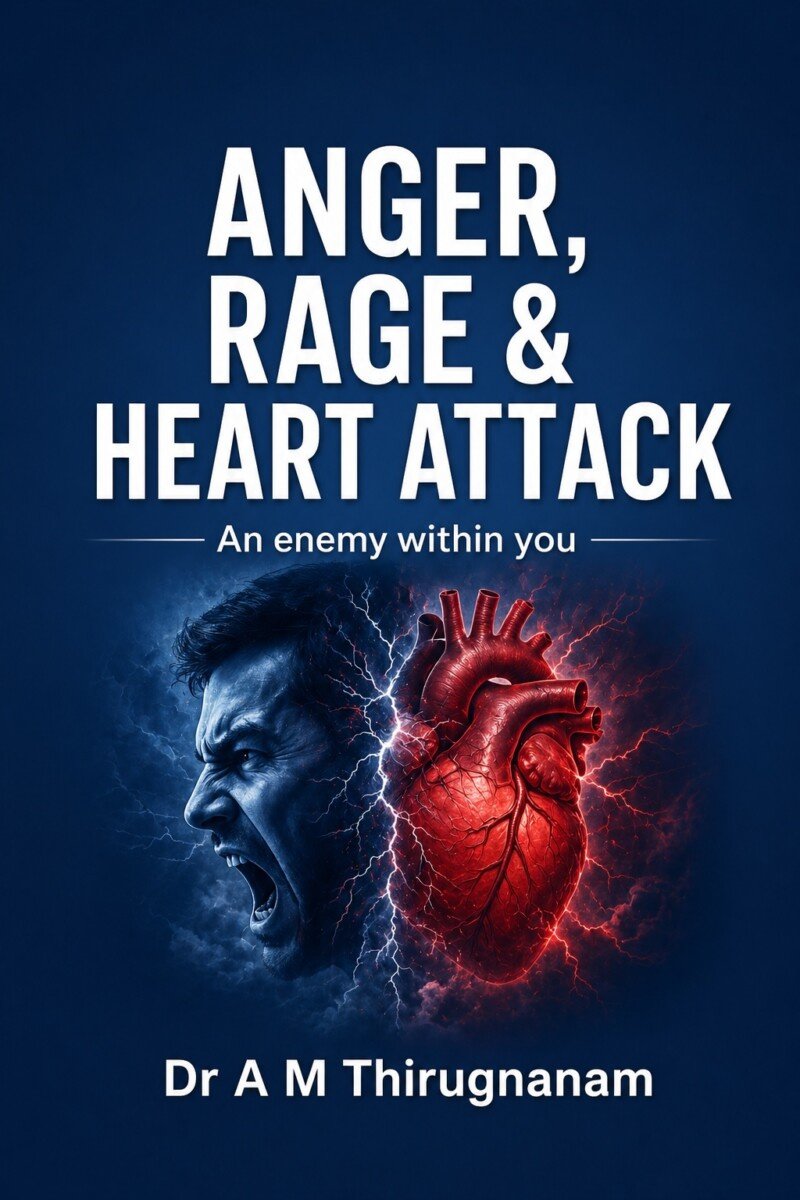
The thing patients say and nobody follows up
The module opens with transcripts. A patient describes the argument that preceded their chest pain; the clinician acknowledges it and moves to the next question. Learners recognise themselves immediately, which is the intended effect.
These 334 pages are the reading that follows.
The physiology, then the conversation
First the mechanism: sympathetic surge, blood pressure and heart rate response, platelet activation, plaque vulnerability, and what the trigger studies actually measured. Then the harder half — how to discuss an emotional trigger with a patient without implying they caused their own event.
That framing problem gets a full session. Done badly it produces guilt and no behaviour change; done well it engages a patient who had already reached the same conclusion and been talked past.
Acute versus chronic
The distinction between episodic rage and chronic hostility is maintained throughout, because the evidence differs between them and conflating the two overstates both.
Management
Techniques with reasonable support, and honest treatment of those without.
Enrolment
All clinical tracks, cardiac rehabilitation staff and psychology colleagues.
PDF, lifetime access, via CardiologyBooks.com.
Reviews
There are no reviews yet.