The teaching problem this text solves
Our case-based modules keep running into the same limit. A learner can be taught a protocol, examined on it, and still make the wrong call at the bedside — because the case in front of them sits just outside the protocol’s assumptions, and nothing in their training told them how to notice that.
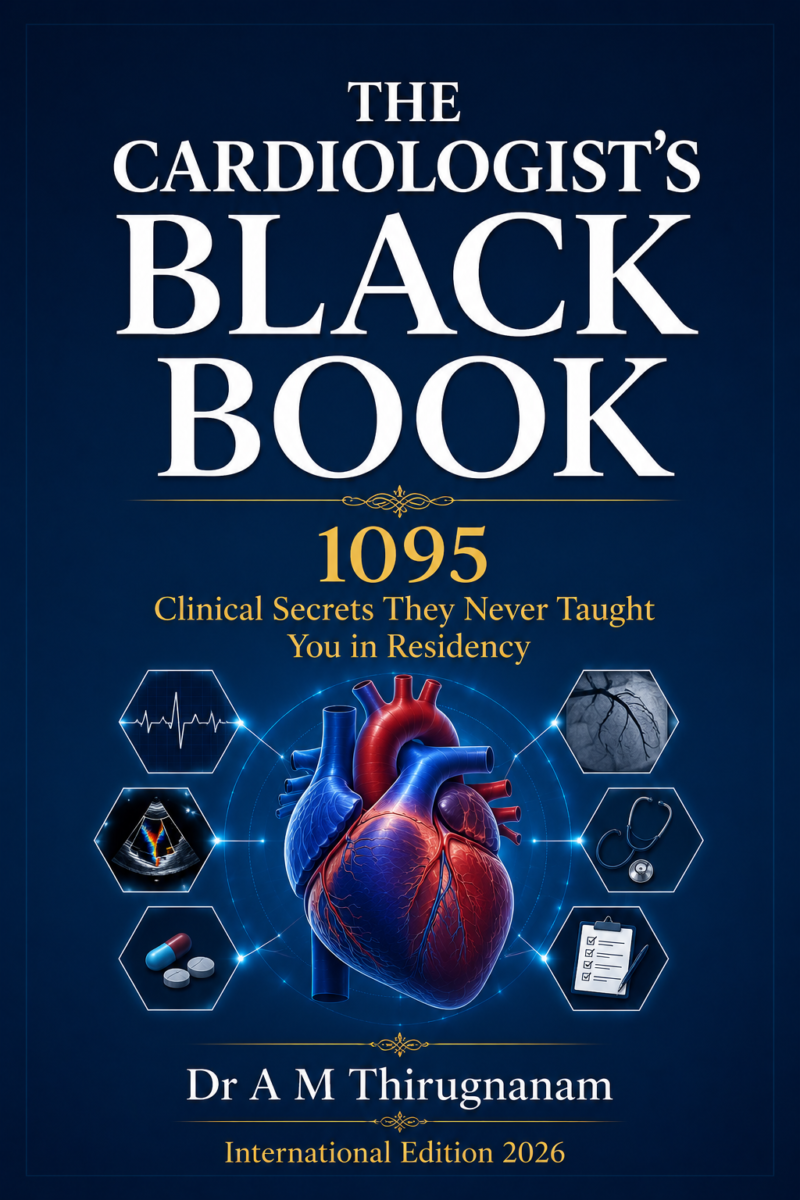
Judgement of that kind is normally transmitted by apprenticeship. This 861-page volume is the closest written substitute we have found, and we set it as the supplementary text for every case-based module for that reason.
How tutors use it
Most commonly as the debrief reading. A case is run, the cohort commits to a management decision, the outcome is revealed, and then the relevant pearls are set — often two or three lines that explain precisely why the majority answer was reasonable and still wrong. The 73 chapters are short enough that this works within a session.
Some tutors run it the other way, opening with a pearl and asking the cohort to construct the case in which it matters. That exercise is harder and generally reserved for senior cohorts.
Where the 1,095 pearls sit
Coronary intervention and its complications carry the largest section, which reflects both the author’s practice and where judgement failures do the most damage. Acute care, valve disease, heart failure, arrhythmia, imaging and pharmacology follow, with a substantial group of pearls on cases that resist categorisation.
The complication material — no-reflow, perforation, retroperitoneal bleed, stent thrombosis — is written with an operational specificity that our learners consistently rate as the strongest part of the book.
Recommended cohort level
Senior modules only. Learners in foundation tracks are directed to the standard texts first; pearls absorbed without the underlying pattern recognition tend to be applied where they do not belong.
Access
PDF, 861 pages, lifetime access via CardiologyBooks.com.
Reviews
There are no reviews yet.