Assessment as teaching
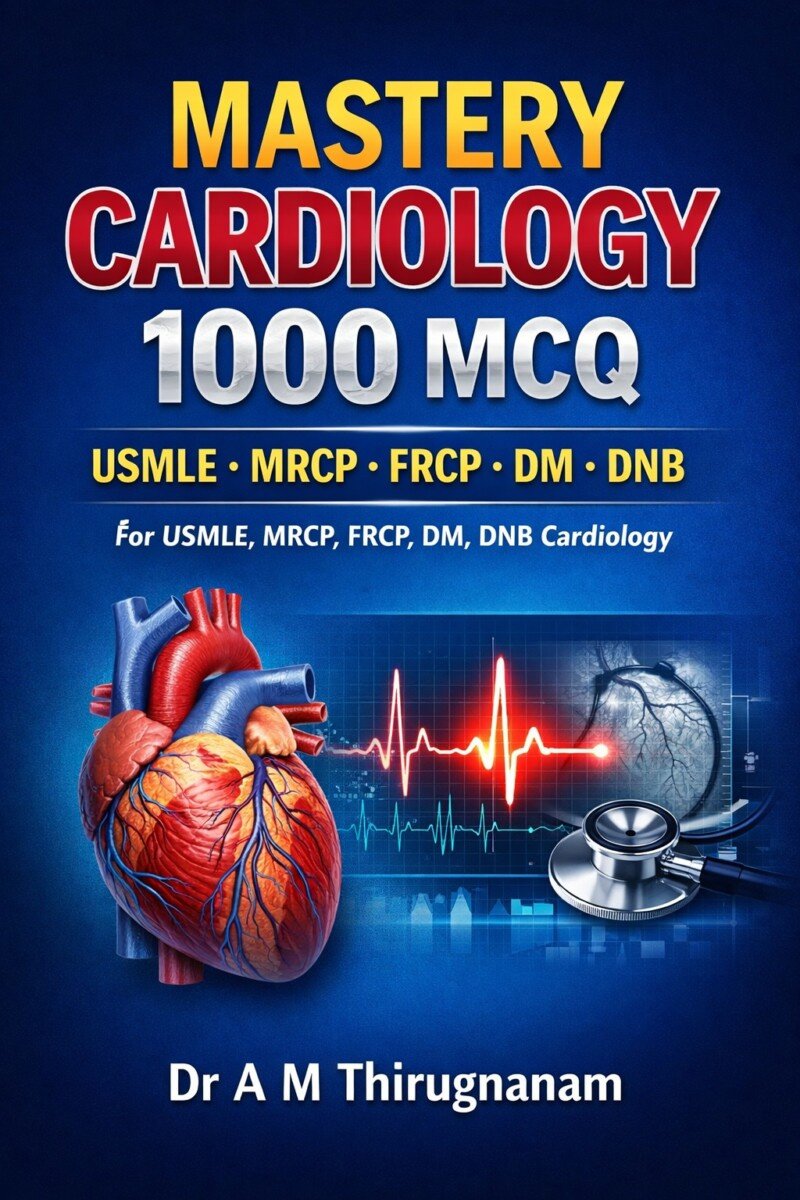
Our module quizzes were built on a principle we take from this book: a question that only tells you whether you were right has wasted the learner’s attention. Every one of the 1,000 questions here explains all options — why the key holds, and for each distractor, the specific misconception that makes it attractive.
That is why it is the assessment companion for the course rather than an optional extra. The feedback style a learner meets in the book is the feedback style they meet in the platform.
Where it fits the module sequence
Questions are grouped to follow the course modules, so a learner completing a module has a defined question set rather than a whole book to sample from. The intended rhythm is: module content, then unfolding case, then the corresponding question set, then whichever chapter of the revision text the questions exposed as weak.
Difficulty calibration
Set to board standard rather than inflated. We have found inflated question banks actively harmful in a course context — learners conclude they are underprepared when they are not, and pace their revision badly as a result. A learner scoring consistently above eighty per cent on these sets is, in our experience, in a defensible position for the real examination.
Coverage across 546 pages
Coronary disease and intervention, arrhythmia and devices, heart failure, valve disease, adult congenital, imaging across modalities, preventive cardiology, lipidology and pharmacology. Where an answer rests on evidence rather than physiology, the explanation names the trial and the guideline year — a detail that matters given how quickly antithrombotic and heart failure guidance has shifted.
Enrolled learners it suits
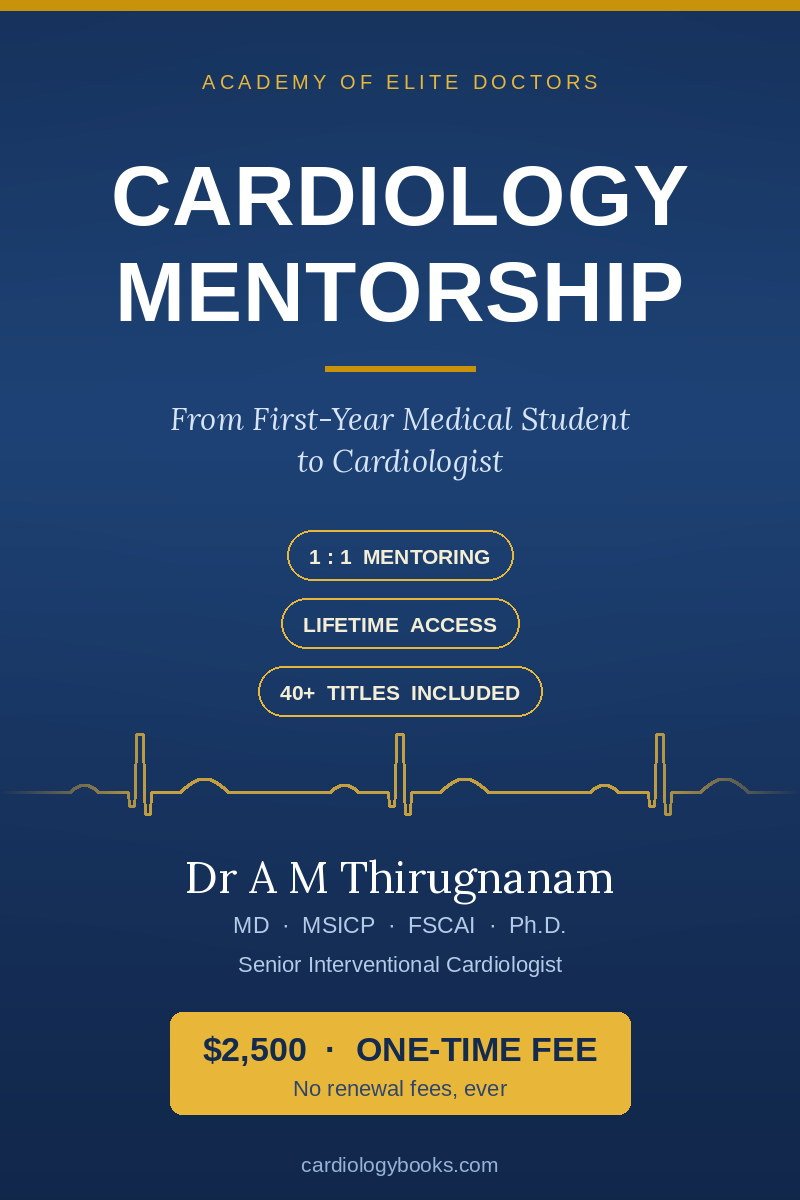
Anyone on the Board Preparation track; DM, DNB and NEET SS candidates using our courses alongside formal training; and internal medicine physicians taking the cardiology modules for CPD.
Delivery
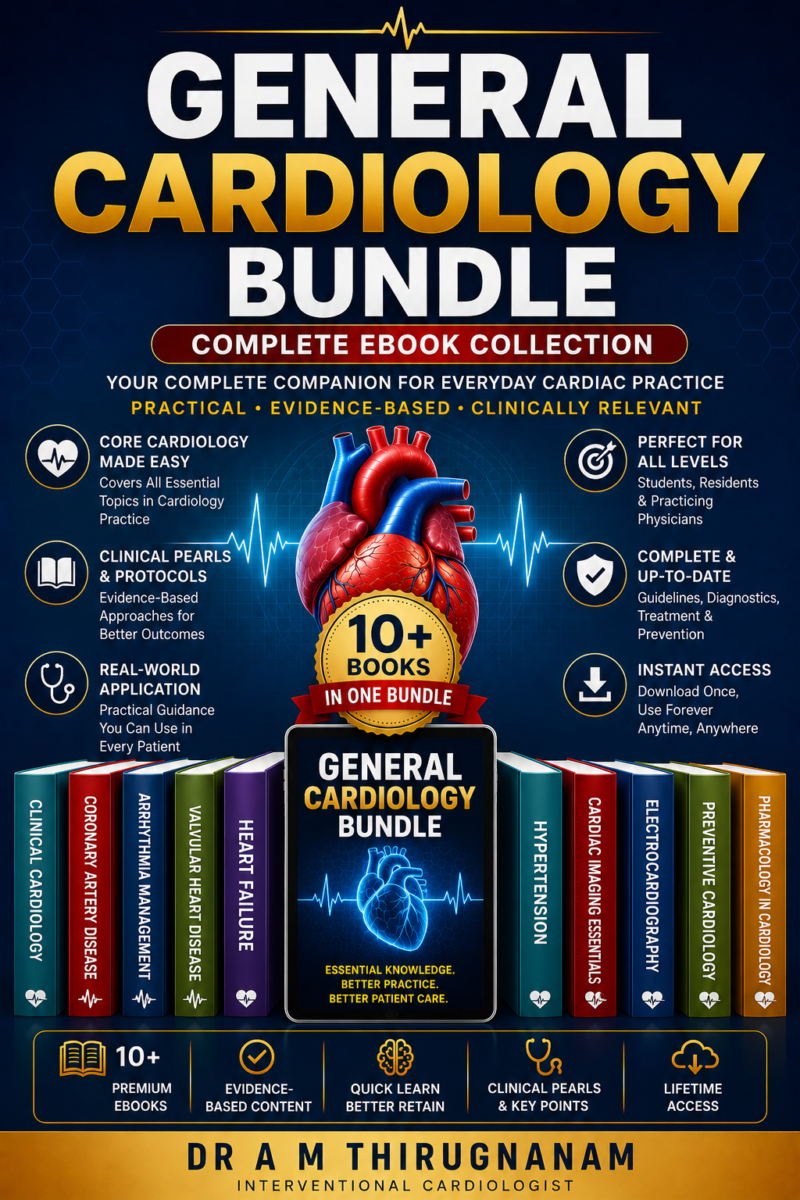
PDF, lifetime access, supplied by CardiologyBooks.com.
Reviews
There are no reviews yet.