
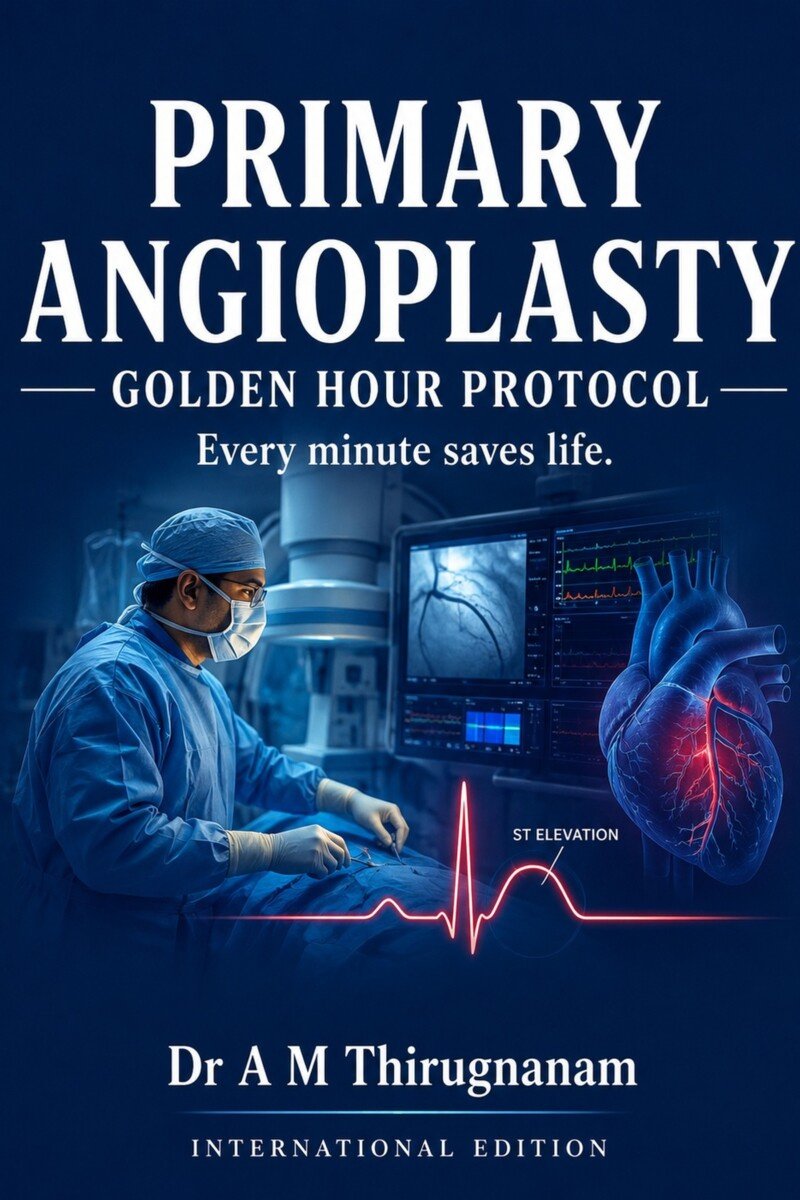
A track that teaches the system too
The STEMI track is the only one we run that includes non-clinical modules, and learners are often surprised by them. Who is permitted to activate the laboratory, whether that needs a cardiologist’s approval, how transfer is arranged, whether the team assembles in parallel — these determine door-to-balloon time far more than operator skill does.
These 30 chapters cover both, which is why they are the set text.
Simulation and pathway modules
The clinical modules run as timed scenarios from first contact. The pathway modules run differently: learners are given a real hospital’s arrangement, asked to find the delay, and then shown what changed when that hospital fixed it. Learners in service-improvement roles usually rate these highest.
Clinical coverage
Recognition and activation criteria, including the under-called patterns. Pre-hospital and inter-hospital transfer. Acute access strategy. Thrombus management. Stent selection. Complete against culprit-only revascularisation on current evidence. No-reflow, with its own module. Shock complicating infarction. Post-procedure antithrombotic strategy.
The difficult modules
Late presentation, and the patient in whom primary PCI is not clearly indicated. Both split the cohort every time, which is precisely why they are taught as cases rather than as guidance.
PDF, 437 pages, lifetime access, at CardiologyBooks.com.
Reviews
There are no reviews yet.