
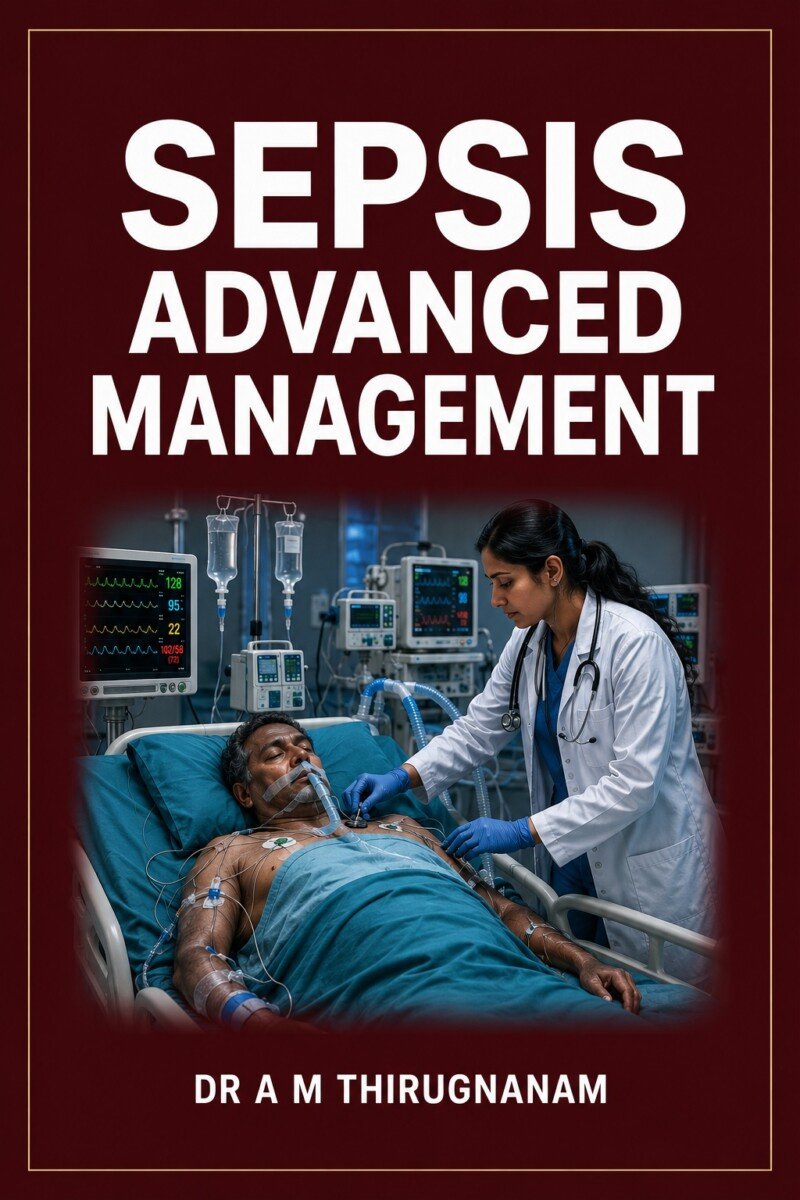
Cases that begin at the point of failure
The Sepsis modules do not start at recognition. They start three litres in, with a patient who is not improving and an intensivist asking a cardiologist what to do — which is the moment cardiac knowledge starts to matter and the moment most sepsis teaching stops.
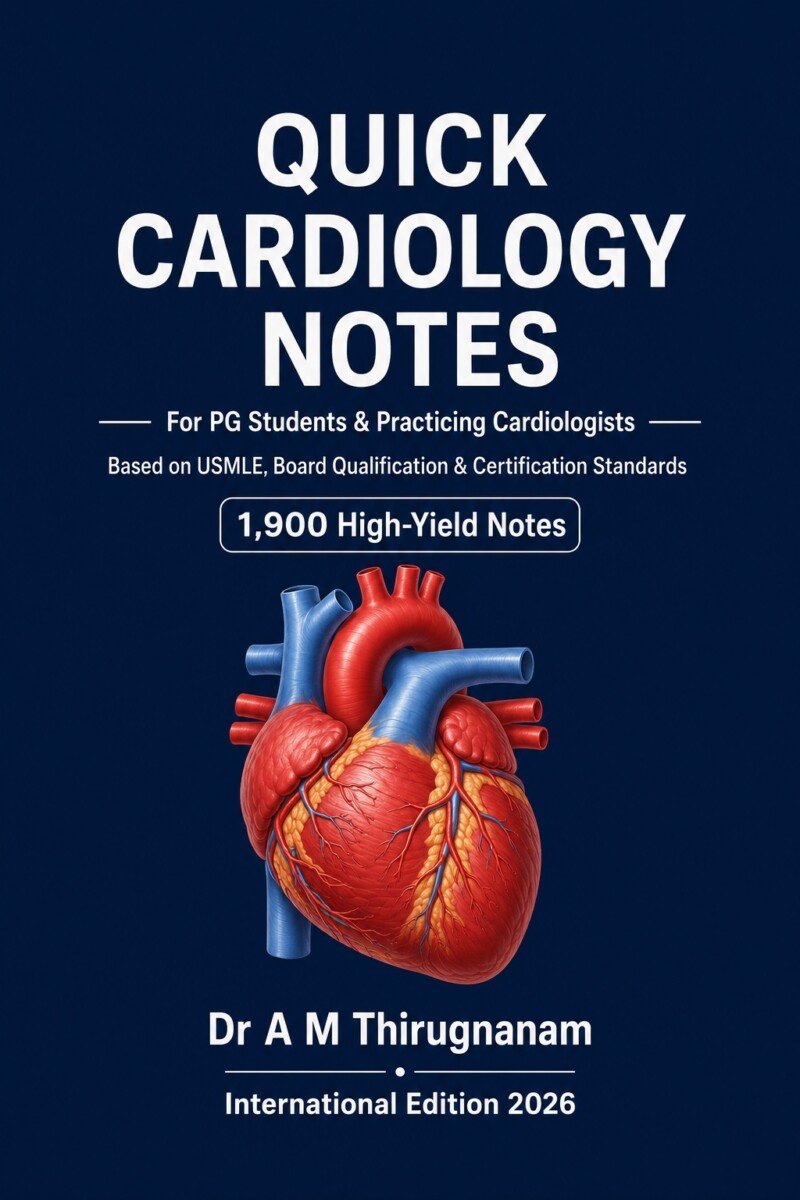
These are the set texts for that block.
What the modules teach
Septic cardiomyopathy: recognising it, its reversibility, and why ejection fraction misleads in a vasodilated circulation. Assessing fluid responsiveness and identifying the point where more fluid harms. Choosing vasopressors and inotropes when the ventricle is already impaired. Sepsis in patients with existing heart failure, valve disease or an implanted device. Troponin rise in sepsis, and separating demand ischaemia from an acute coronary event.
The general sepsis block
Recognition and scoring, source control, antimicrobial timing, lactate interpretation and de-escalation — taught first, because the cardiac modules assume all of it.
Mixed cohort
Like Cardio-Obstetrics, this block is deliberately mixed: intensivists and cardiologists working the same cases. The recurring finding is that each group is confident about a different half of the problem, which is exactly the situation the modules exist to fix.
Enrolment
Intensivists, emergency physicians, cardiologists, acute physicians and critical care nursing staff.
PDF, lifetime access — instant download on this site after secure checkout.
Reviews
There are no reviews yet.